
Pillar 01
Agriculture
Food systems that restore living soil, hold water, and keep seed in community hands.
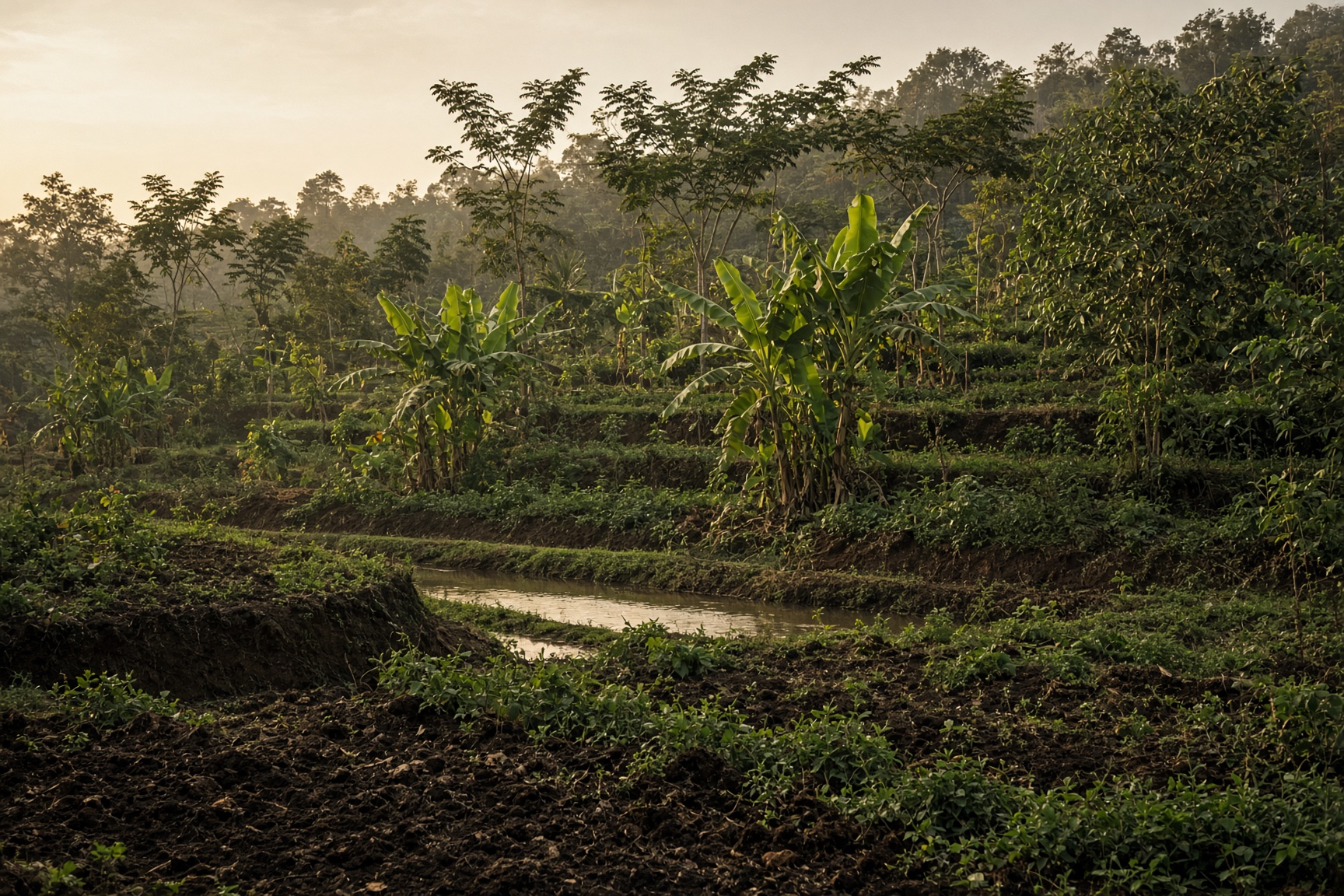
Industrial agriculture extracts fertility and replaces it with inputs. The records in this pillar document methods that reverse that ledger: stacked canopies, water that walks the land slowly, carbon returned to the ground, and seed that can be saved, shared and adapted in place. The aim is not yield at any cost. It is a household, a neighborhood, a bioregion that can feed itself without stripping the ground it stands on.
Other pillars
5 records
Methods in this pillar
Syntropic agroforestry
A stratified food forest that feeds the soil as it feeds people, using dense planting, timed pruning, and succession instead of tillage and fertilizer.
Keyline water harvesting
A reading of the land that spreads water out of the valleys and into the ridges, so rain becomes fertility instead of erosion.
Charged biochar for living soil
Charcoal is not fertilizer. Charged with compost, urine or compost tea, it becomes a sponge for water and microbial life that stays in the ground.
Community seed library
A public shelf of locally adapted seed, with simple rules for borrowing, growing-out and returning — the smallest unit of food sovereignty.
Silvopasture in short rotation
Trees, forage and a small herd on the same ground, moved often enough that the pasture recovers and the canopy is not browsed to death.