
Pillar 03
Urban Design
Neighborhoods that grow food, hold rain, and can be built with the earth underfoot.
Most cities are designed to move cars, pipe water away, and import everything a body needs. The records here treat the block as a living system: sponge streets, productive courtyards, laneway orchards, rammed-earth infill, and walking catchments that keep daily life inside a short radius. Urban design, in this system, is not a style. It is the spatial contract that makes agriculture, energy and healing possible in the same place.
Other pillars
5 records
Methods in this pillar
Sponge streets
A street that is asked to drink: rain gardens, permeable paving and a curb that lets water into soil instead of a pipe.
Continuous productive urban landscapes
A connected ribbon of growing space through a city — not leftover planters, but a walkable, edible open-space system.
Rammed earth infill
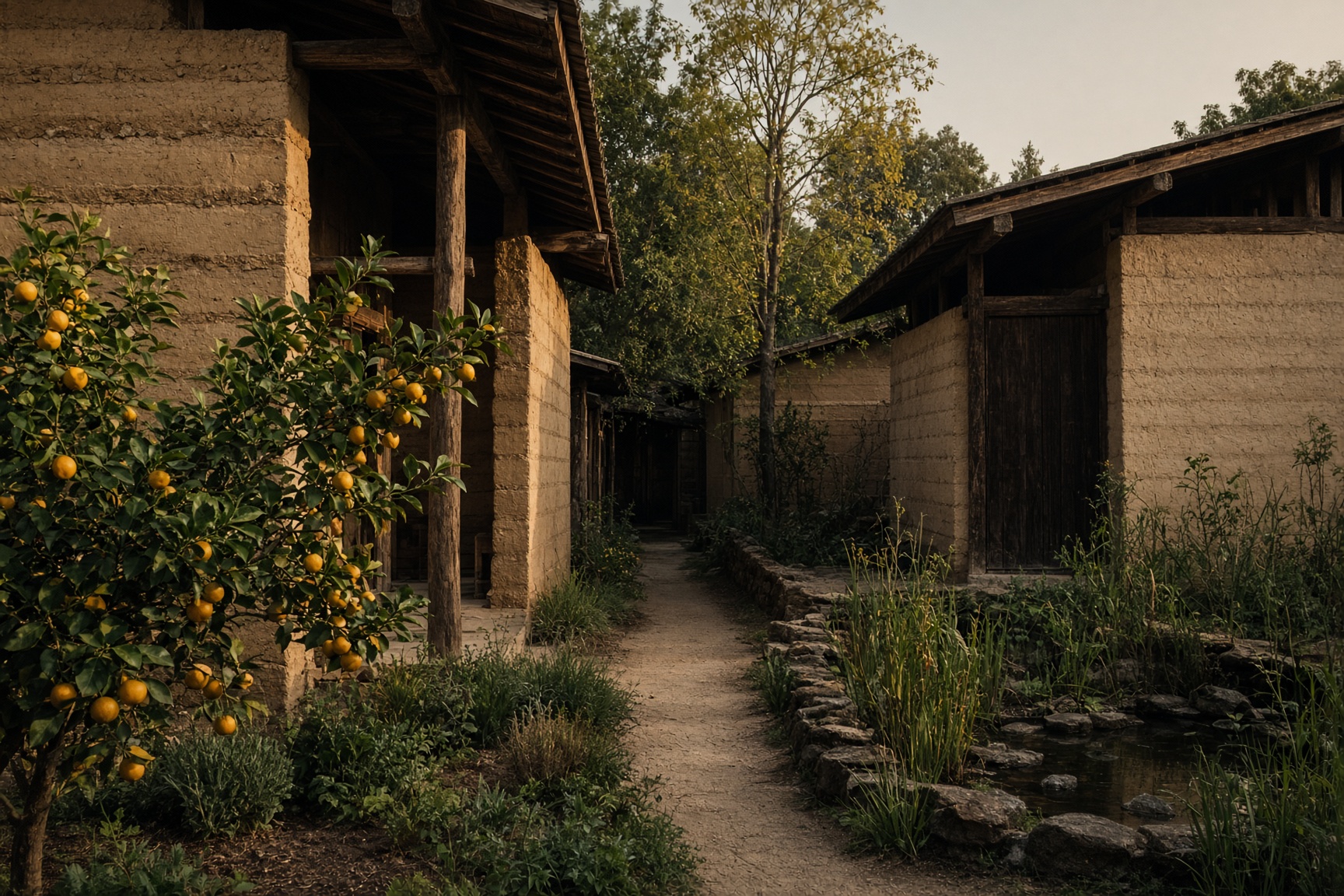
Walls made from the site's own subsoil, compacted in a formwork, so a room can be added without a truck of fired brick.
Laneway food corridors
The forgotten alley turned into a productive, lit, walked space — fruit on the walls, herbs at the door, eyes on the path.
Water-sensitive block
A housing block that catches, uses, and soaks its own rain before anything leaves for a pipe — cistern, greywater, then garden.